

The integration of cutting-edge technology in science centers and planetariums marks a transformative period for immersive educational experiences. Across the globe, institutions are embracing innovations that enhance visual fidelity, interactivity, and flexibility in how knowledge is delivered. According to the International Planetarium Society, visitor engagement increasingly hinges on the ability of venues to offer realistic, captivating multimedia experiences that merge STEM learning with cultural and artistic expression. This trend not only expands the potential audience demographic but also reinvents how traditional institutions can serve as community hubs for education and entertainment.
Among the leaders in this renaissance is the Arizona Science Center, whose recent upgrade of the Dorrance Planetarium underscores a broader shift toward LED-based dome projection systems. Tammy Stewart, interim Hazel A. Hare president & CEO of the center, emphasizes that the motivation behind this upgrade was to preserve the center’s prestige and relevance: “We were at a stage where it was time to update the equipment… we wanted to make sure that we invested in something that would be a true attraction to our community, both locally and also for tourists” (Stewart, blooloop.com). This perspective reflects a growing awareness among science centers that sustaining visitor interest requires not only educational content but also the wow factor delivered through technological advancement.
Kirk Johnson, chief operations officer at Cosm, highlights the power of firsthand experience in driving buy-in from stakeholders. He recalls the pivotal moment when Arizona Science Center’s leadership saw the CX System LED dome in action: “After the board visited, they said to the CEO, ‘You lied to us. It only took 10 seconds.’ And I think that’s the power of this technology. People get it” (Johnson, blooloop.com). This anecdote points to a critical dynamic in technology adoption—the experiential impact often surpasses technical explanations. For decision makers, witnessing the vividness and immersion of the LED dome makes the benefits undeniable, accelerating investment decisions and fostering advocacy for innovation.
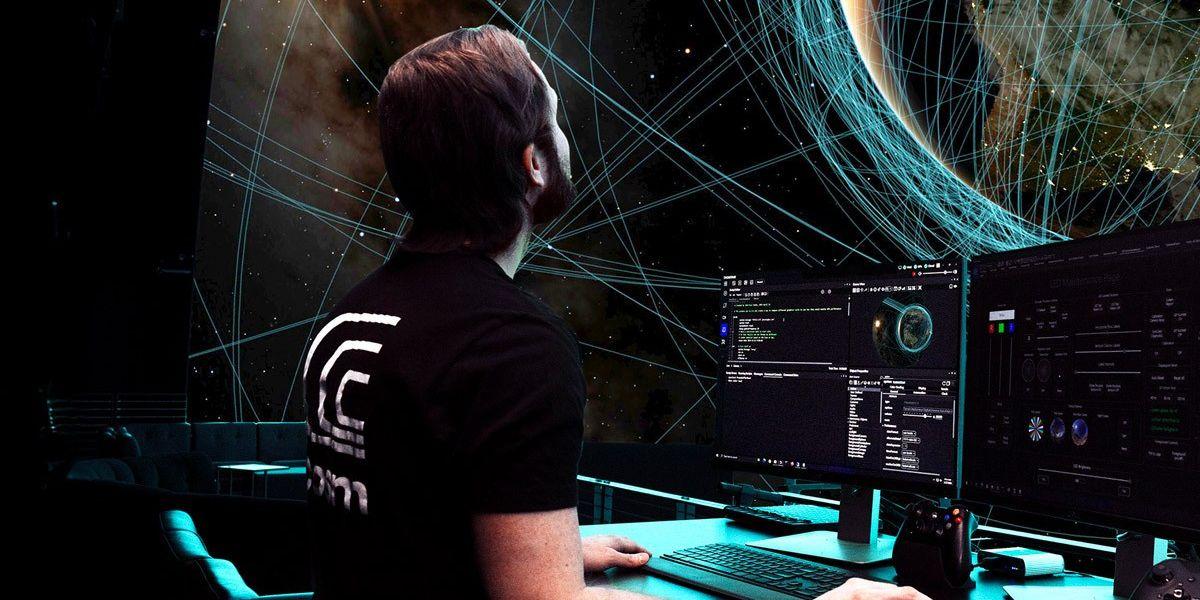
The technical leap in the Dorrance DOME is both significant and strategically executed. The 18-meter dome composed of over 9,000 individual LED panels creates an 8K+ resolution surface that is quoted as “more than 100 times brighter than a typical planetarium projector and 150 times brighter than the previous system” with a contrast ratio ten times greater than projection-based domes (Johnson, blooloop.com). This enhanced brightness and “true black” capability eliminate issues like cross-bounce light reflection, fundamentally altering how audiences perceive cosmic phenomena and immersive content. Such visual quality not only transforms the sensory experience but also extends possibilities for content creators seeking to captivate and educate.
Stewart further reveals a progressive approach to leveraging this new flexibility: “Half the seats actually roll away and create a flat space within our planetarium… This flexibility really allows us to create a welcoming space” (Stewart, blooloop.com). This innovation turns the planetarium from a rigid, lecture-style venue into a multifunctional space adaptable for yoga sessions, corporate events, or interactive performances. The convergence of art, culture, and STEM in this setting encourages fresh audience interactions and revenue diversification, themes increasingly central to museum and science center viability in the 21st century.
These advancements have powerful implications for the fulldome and immersive cinema sector. For content creators, the rise of ultra-bright LED domes with high resolution and true blacks opens doors for richer, more detailed visual storytelling that can evoke greater emotional and intellectual impact. Venues equipped with this technology can host a wider variety of programming formats, enhancing appeal to both educational institutions and general audiences. Additionally, partnerships like Arizona Science Center’s collaboration with Arizona State University’s Media and Immersive eXperience (MIX) Center exemplify how facilities can serve as incubators for emerging immersive creators, blending academic research with real-world production—a potential catalyst for innovation within the fulldome community.
Moreover, the operational sustainability of LED systems, with longer lifespans and easier maintenance, positions these installations as long-term investments that offer consistent quality without prohibitive upkeep costs. This reliability encourages venues to experiment with diverse programming without fearing technological downtime or degradation. The success of projects like the Dorrance DOME signals a growing industry standard in immersive learning and entertainment, suggesting that other science centers and immersive cinemas will likely follow suit in adopting comparable technology, ultimately raising audience expectations and enriching the collective cultural landscape.
Originally reported by via blooloop.com on 2026-02-09 02:33:45.
Read the full original article here: blooloop.com