

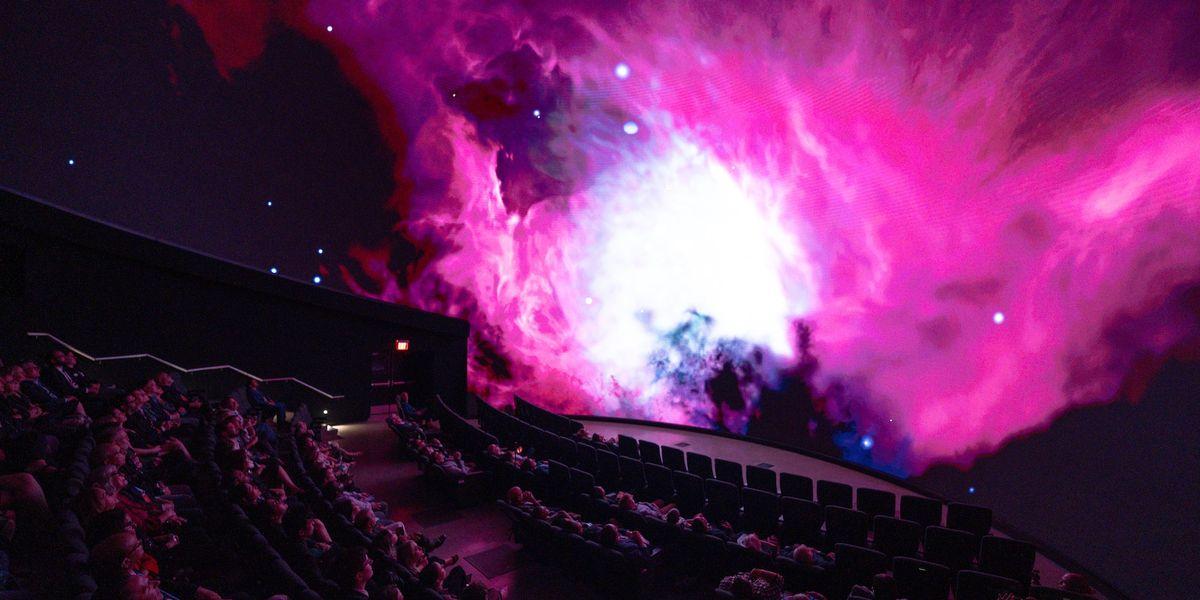
The landscape of science education is rapidly evolving, with immersive technology playing an increasingly pivotal role in making learning experiences more engaging and accessible. Recent advancements in LED dome technology are transforming planetariums from traditional dark rooms with basic projections into dynamic, interactive environments that blend high-resolution visuals with cultural storytelling. This shift resonates strongly within educational institutions seeking to bridge the gap between scientific knowledge and community engagement. According to UNESCO, nearly 60% of the global population now lives in urban areas, underscoring the importance of accessible scientific resources to a broad audience, particularly in regions where such opportunities have traditionally been limited.
Located in Paraguay, the Blas Servín Planetarium is a groundbreaking example of how technology can democratize access to science. As the first LED dome in South America featuring an 8K+, 20-meter CX System, it promises an unprecedented viewing experience for its visitors. Paola Martinez, MuCi’s executive director, emphasizes the importance of this integration: “We chose to partner with Cosm because we believe in the power of merging the highest quality technology with our ability to tell stories to bring people closer to science” (Martinez, blooloop.com). This partnership exemplifies a broader trend in STEM education to leverage immersive storytelling, not just to present facts, but to foster a deeper, emotional connection with scientific content.
The innovative capabilities of the Blas Servín Planetarium extend far beyond stunning visuals. By incorporating Cosm’s CX System — which includes the immersive Digistar education platform and Unreal Engine integration — the planetarium can deliver scientifically accurate astronomy simulations combined with interactive and inclusive learning experiences. This approach is crucial for engaging diverse audiences and making complex concepts approachable. “Whether sharing the intricacies of the Milky Way galaxy or giving visitors front-row seats at significant scientific events, the Blas Servín Planetarium is set to be a launchpad for discovery, innovation, and community impact” (blooloop.com). Such immersive experiences can inspire curiosity and encourage community participation in scientific discourse, fostering a culture of lifelong learning.
Moreover, this technology opens avenues for original content creation, blending education with cultural and artistic expression. The planetarium can host immersive cultural events, live shows, and community fundraisers — activities that are essential for strengthening its educational and entertainment roles. The integration with Cosm’s Premium Media Program ensures a steady stream of fresh, dynamic content, helping to maintain visitor engagement over time. This multidimensional approach positions the planetarium not only as a hub for astronomy but as a vibrant community space reflecting local heritage and contemporary science.
The establishment of the Blas Servín Planetarium also honors the legacy of Blas Servín, a prominent Paraguayan astronomer dedicated to making astronomy accessible to broad audiences. Naming the planetarium after him symbolizes a continuation of his mission: “The next-generation planetarium serves as an extension of his role as one of Paraguay’s most prominent promoters of astronomy and as a bridge between contemporary sky science and the region’s cultural heritage” (blooloop.com). This connection reaffirms the role of immersive science centers as cultural as well as educational institutions, capable of inspiring new generations by contextualizing scientific exploration within local narratives.
Kirk Johnson, chief operations officer at Cosm, captures the significance of this initiative: “MuCi’s forward-thinking approach and commitment to accessible science education captures the spirit of what’s next for immersive science education… ushering in a world-class destination that embodies the power of experiential learning that is set to inspire future explorers across South America and beyond” (Johnson, blooloop.com). This momentum reflects a growing recognition that inclusivity and innovation must go hand-in-hand for science education to thrive in the 21st century.
For the fulldome and immersive cinema industry, the Blas Servín Planetarium represents an exciting development in creating and delivering rich, interactive content. Fulldome content creators can explore new storytelling potentials by combining the scientific rigor of astronomy with the emotive power of digital art and local cultural themes, broadening their creative horizons. For venues, the ability to host mixed-use programs — from educational simulations to cultural performances — offers diversified revenue streams and enhanced community relevance.
Educational programming stands to benefit immensely from such advancements. As immersive technology continues to improve, it allows educators to design experiences that are not only informative but also inclusive and participative, reaching wider demographics. This trend encourages a holistic approach to science communication that is experiential and deeply engaging, fostering active learning rather than passive observation.
Ultimately, innovations like the Blas Servín Planetarium highlight the transformative potential of immersive technology in science museums and planetariums worldwide. By blending cutting-edge LED dome systems with community-centered programming, such institutions can sustain visitor interest, promote STEM vocations, and position themselves as vital cultural landmarks in their regions and beyond.
Originally reported by via blooloop.com on 2026-01-19 05:35:00.
Read the full original article here: blooloop.com