

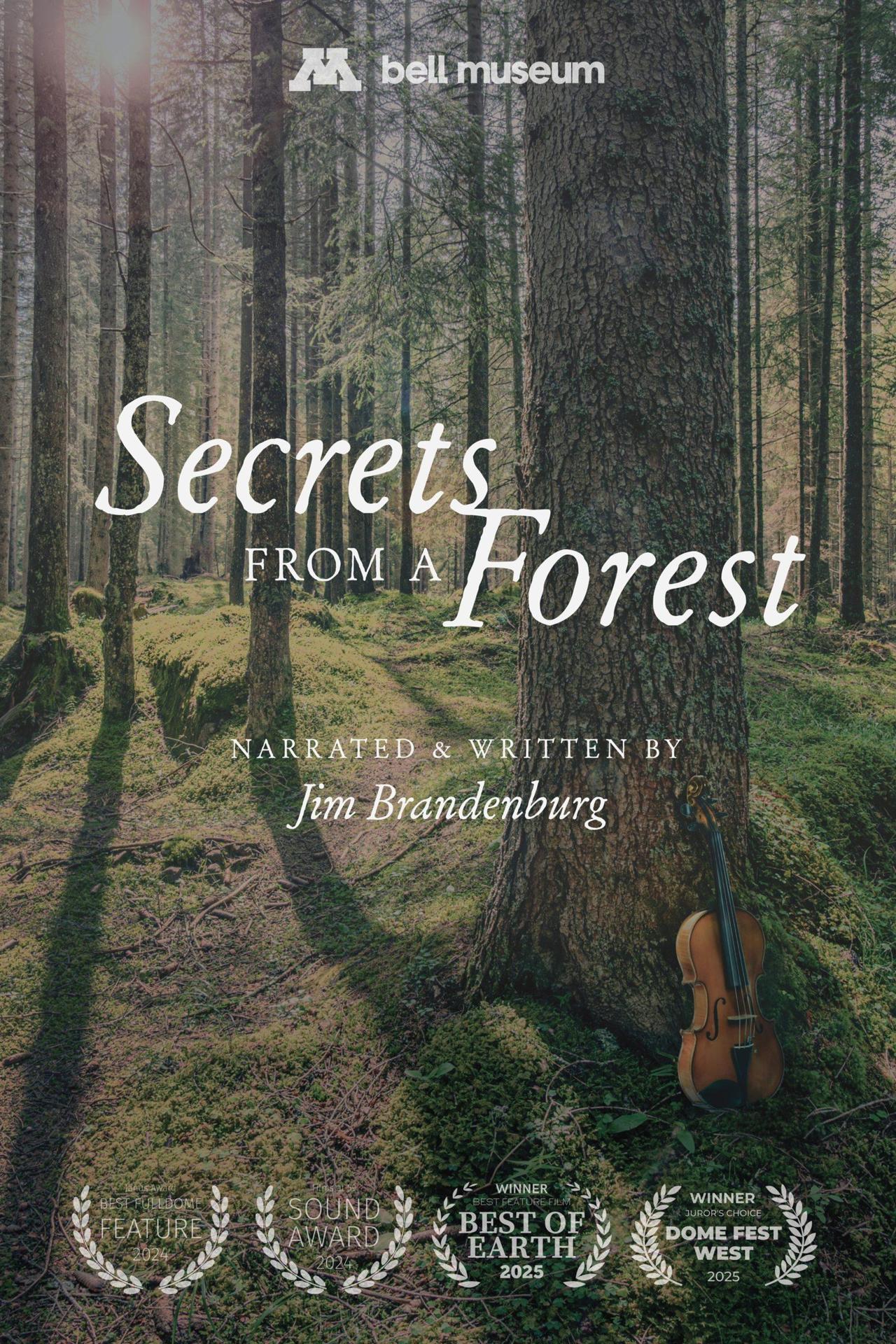
In the evolving landscape of immersive media, the union of art, nature, and cutting-edge technology offers fresh avenues for storytelling and sensory engagement. A compelling example of this is the new fulldome production, “Secrets from a Forest,” an original Bell Museum creation that invites viewers into a captivating exploration of the connection between nature and art, exemplified through the history and craftsmanship of the Stradivarius Violin. Guided by the renowned nature photographer Jim Brandenburg and acclaimed director Neil Lucas, this work bridges the natural world and human creativity, enriched by the evocative sounds of the Minnesota Orchestra.
“Secrets from a Forest” emerges as more than just a visual journey; it synthesizes an intricate narrative across seasons in the Paneveggio Forest of Northern Italy, renowned for its “singing” spruce trees—the prime material for crafting Stradivarius violins. The project offers an intimate look into these majestic forests, emphasizing the intricate ecological interactions that influence tree growth. Then, viewers transition into the meticulous craft of violin making, culminating in a concert hall where the instrument’s profound harmony resonates, underscoring “the thrilling and powerful result of this delicate dance between human beings and nature.”
This fulldome experience leverages the immersive power of the medium to tell a nuanced story that spans natural ecosystems and human artistry. The production’s narrative approach—moving from the microscopic life shaping grand trees to the artisan’s workshop and finally to the concert hall—highlights a multi-sensory storytelling technique, blending visual, acoustic, and emotional layers. The involvement of artists like Brandenburg and Lucas lends it an artistic authenticity that elevates the traditional fulldome format, commonly seen in scientific or environmental presentations, to a sophisticated expression of culture and heritage.
From a technical perspective, creating such an immersive narrative likely involves advanced rendering pipelines that seamlessly blend high-resolution natural imagery and finely detailed interior scenes of the violin maker’s studio. Capturing the nuanced textures of the forest’s seasonal changes and the delicate craftsmanship process points toward an integration of real-world footage enhanced with digital techniques to maintain realism while thriving in a fully immersive sphere. Additionally, the sound design—featuring the Minnesota Orchestra’s participation—is critical, as spatial audio technologies enable the nuanced acoustics of the violin concert to envelop the audience, delivering an authentic auditory experience that complements the visuals.
Innovations such as dome master workflows ensure that the visuals are perfectly aligned and distortion-free when projected in fulldome environments, preserving the story’s emotional impact. Furthermore, the use of spatial sound, possibly through ambisonics or wave field synthesis, allows audiences to feel immersed in the concert hall atmosphere, a feat hard to achieve in traditional cinema settings. Such technology not only enhances engagement but also makes the nuanced aspects of the violin’s tonal qualities and the forest’s subtle sounds more perceivable in an immersive context.
The fulldome format serves as an ideal platform for “Secrets from a Forest” as it simultaneously educates and enchants, enabling audiences to experience the subtle interdependencies of nature and human craft in a surround environment. This immersive presentation could reshape how museums and science centers use fulldome theaters, expanding their scope from purely educational content toward fine arts and cultural showcases that appeal to broader audiences. The combined use of fine art photography, ecological narrative, and orchestral music within a fulldome setting exemplifies the potential for fulldome productions to become multi-disciplinary experiences.
However, as immersive content grows increasingly sophisticated, the adoption of such productions may face hurdles, including the technical and creative expertise required and the investment in high-fidelity audio-visual equipment capable of supporting large-scale full-dome projections. Content producers and venues may also need to rethink their programming strategies to accommodate these new hybrid forms that blend storytelling with art and science. Nevertheless, “Secrets from a Forest” lights a path forward, demonstrating how immersive media can deepen our appreciation of natural and cultural history while stretching the experiential possibilities of fulldome environments.
In sum, this original Bell Museum production not only celebrates the artistic and ecological marvels behind the Stradivarius violin but also exemplifies how immersive technology can foster new dimensions of storytelling. By weaving together nature’s rhythms, human craftsmanship, and orchestral artistry in a fulldome format, it points to exciting future intersections of technology, art, and education in immersive media.
Originally reported by Bell Museum via www.fddb.org on 2025-12-19 09:35:00.
Read the full original article here: www.fddb.org