

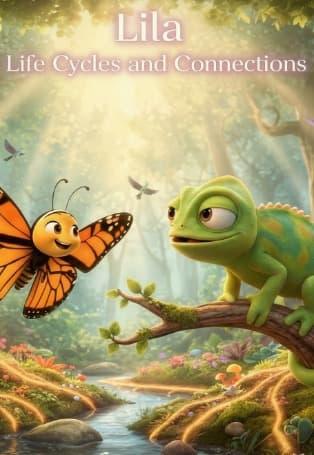
Reimagining Education Through Immersive Ecosystems: A Vital Leap Forward
In an era where climate crises and ecological degradation dominate global discourse, the way we educate future generations about the natural world demands transformative innovation. Traditional textbooks and lectures no longer suffice to truly engage young learners or instill an urgent, empathetic understanding of environmental interdependence. Immersive educational experiences like “Lila: Life Cycles and Connections” herald a new frontier, where science education transcends passive absorption and becomes an unforgettable journey of discovery and responsibility.
This shift is not merely about using flashier technology; it is about revolutionizing how we relate to and internalize ecological complexity. When students shrink to the size of a caterpillar to witness photosynthesis or observe the underground communication of trees through mycelium, learning stops being abstract and becomes a visceral encounter. As the source article describes, participants become “Ecosystem Heroes” alongside Lila, moving beyond facts to embody the intricate webs sustaining life. This approach challenges the outdated paradigm that education is a one-way transmission of knowledge and instead invites learners into a dynamic, experiential dialogue with nature.
The immersive qualities of “Lila: Life Cycles and Connections” underscore a vital truth: education must not only convey scientific knowledge but also foster ecological awareness and empathy. As noted, the program “stunningly demonstrates that in nature, every being and every process is deeply connected.” This is precisely where fulldome media and immersive technologies excel—by creating awe-inspiring environments that make invisible natural processes tangible and emotionally resonant. Similar initiatives, such as the use of virtual reality to simulate coral reef ecosystems or fulldome films on biodiversity, show that immersive storytelling can inspire both wonder and a sense of stewardship. However, not all projects achieve this balance; some risk becoming mere spectacle if they fail to anchor immersive elements in meaningful ecological narratives.
The implications for the creative industries and educators are profound. Immersive science education aligns perfectly with growing audience expectations for interactivity and experiential learning. Research indicates that today’s learners retain information better when actively engaged and emotionally invested, making immersive experiences potent tools against climate apathy. Moreover, venues like fulldome theaters, science centers, and museums gain fresh relevance as hubs of transformative education, attracting diverse audiences seeking impactful, multi-sensory encounters. For content creators, this trend encourages collaboration between scientists, educators, and technologists to craft experiences that are not only visually stunning but scientifically accurate and ethically informed.
Long-term, embracing immersive ecosystem narratives could redefine the educational landscape. By equipping learners with a felt understanding of phenomena such as the water cycle or biodiversity loss, these experiences cultivate critical thinking, environmental literacy, and empathy—qualities essential for future climate action. They also highlight the interconnectedness of all life, fostering a mindset shift from human-centered to ecosystem-centered thinking. This transition is critical in combating fragmented environmental policies and promoting holistic, sustainable solutions.
Yet, challenges remain: ensuring equitable access to cutting-edge technology, avoiding didacticism, and balancing entertainment with education demand careful stewardship. The industry must prioritize inclusivity and scientific integrity while harnessing immersive media’s emotional power.
As creators and educators embrace this exciting paradigm, we must ask: How can we leverage immersive experiences not only to inform but to inspire measurable action towards environmental preservation? What partnerships between artists, scientists, and communities are necessary to scale these initiatives globally? The future of ecological education hinges on our willingness to innovate boldly and ethically. Let us seize this opportunity to cultivate not just knowledge, but a generation of true Ecosystem Heroes ready to protect the delicate balance of our planet.
Originally sparked by reporting from Mariano Hernandez Rodilana via www.fddb.org on 2026-02-03 23:28:00.
Explore the original article here: www.fddb.org