

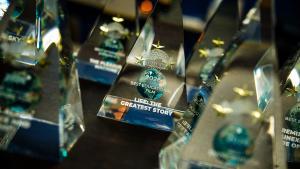
The recent success of Dome Fest West 2026 signals a pivotal moment for the fulldome film industry—one that demands a thoughtful reflection on the evolving role of immersive cinema as both an artistic medium and a business catalyst. The festival’s deliberate pivot towards a more focused, industry-centric event underscores a broader transformation within creative communities: the need to balance visionary storytelling with sustainable commercial frameworks. This shift challenges long-held perceptions of festivals as primarily public showcases and invites us to reconsider what success looks like in this specialized, boundary-pushing domain.
Ryan Moore, Executive Director of Dome Fest West, encapsulated this new reality perfectly when he shared, “We made a deliberate choice to create a more focused, industry-forward event, and the result was the most productive Expo floor we’ve ever had.” This strategic focus fostered unprecedented business activity, with robust exchanges of licensing, distribution, and co-production agreements. It’s a powerful reminder that fulldome cinema is no longer just a niche attraction but an emergent industry with significant economic potential. This economic vitality is reflected across the immersive media landscape, where events like the Venice Virtual Reality Festival and South by Southwest’s VR/AR showcases similarly embrace hybrid roles as both artistic platforms and deal-making arenas. These gatherings nurture ecosystems that support innovation but also require sustainable infrastructure to thrive.
The thriving business side of fulldome festivals is complemented by artistic excellence that continues to push technical and narrative boundaries. Dome Fest West’s screening of works like Laura Inserra’s Qualia, which won both Juror’s Choice and Audience Choice awards, illuminates the medium’s capacity to resonate deeply with diverse audiences. Similarly, productions such as James Hood’s Astronomica combine orchestral music with 8K immersive visuals, exemplifying the experiential prominence that fulldome environments offer, unmatched by conventional cinema. Yet, this artistic sophistication also raises questions about accessibility and funding—key challenges confronting creators eager to innovate but needing viable distribution pathways and institutional support. The increasing involvement of planetariums and technology innovators at Dome Fest West suggests a healthy convergence, but it demands strategic collaboration to scale impact without diluting artistic integrity.
Why does this recalibration between art and industry matter? As immersive environments increasingly engage audiences seeking new modalities of storytelling, the stakes grow higher for all ecosystem players—filmmakers, venue operators, distributors, and technologists alike. Fulldome cinema’s potential to educate, inspire, and entertain hinges on robust platforms that facilitate discovery and commercial viability. Venues benefit from fresh, compelling content that drives attendance, while creators need distribution channels that reward risk-taking innovation. However, the industry’s niche status still leaves it vulnerable to funding fluctuations, technology obsolescence, and audience fragmentation. Long-term sustainability will require proactive business models, adaptable programming strategies, and investments in both creative R&D and audience cultivation.
Moreover, the success of Dome Fest West shines a light on the critical role of industry gatherings in ecosystem-building. By fostering direct connections among stakeholders, festivals become crucibles for new collaborations and market opportunities. This model could serve as a blueprint for other emerging media sectors where technology and content often race ahead of traditional distribution mechanisms. As immersive media evolves, the ability to convene cross-disciplinary communities with shared commercial and artistic stakes will be paramount.
Looking forward, the fulldome community faces a vital question: How can creators, programmers, and vendors collectively foster an environment where artistic ambition and business acumen reinforce rather than compete with each other? It is imperative to shift mindsets from viewing commercial success and artistic purity as opposing forces, towards embracing a synergistic relationship that amplifies both. Festivals like Dome Fest West demonstrate the power of intentional industry alignment—but sustaining this momentum will require ongoing dialogue, innovative funding models, and dynamic audience engagement strategies.
As we anticipate Dome Fest West 2027 and beyond, the fulldome industry is poised at a crossroads. Will it continue to evolve as a vibrant, economically viable medium that expands the horizons of immersive storytelling? Or will it risk marginalization by neglecting the strategic imperatives behind its creative advances? The answer rests on the community’s willingness to embrace complexity and forge collaborative pathways that honor both the art and the enterprise of immersive cinema. The future of fulldome depends on it.
Originally sparked by reporting from via natlawreview.com on 2026-04-30 07:45:00.
Explore the original article here: natlawreview.com