

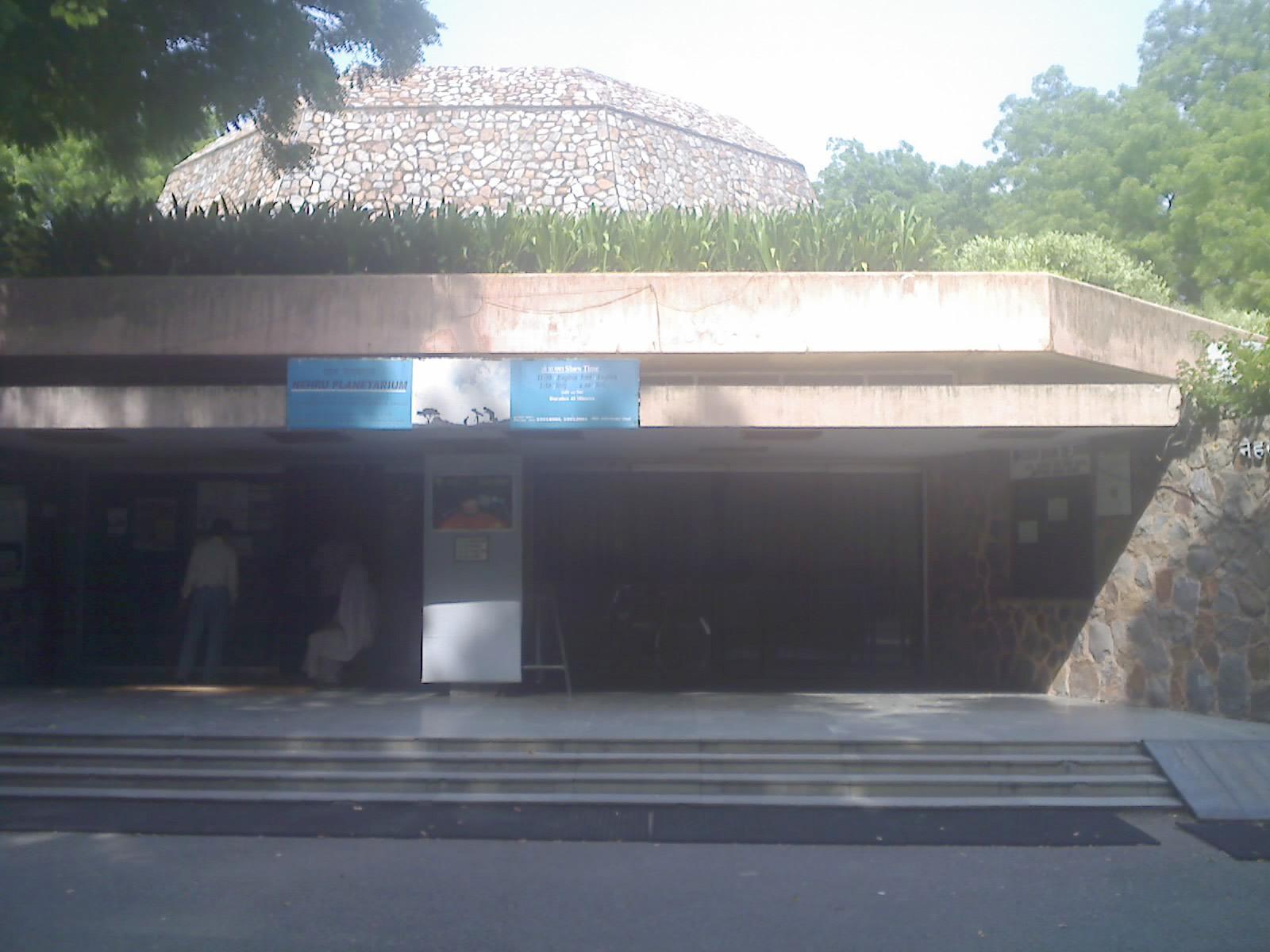
On the occasion of Nehru Planetarium Mumbai’s 49th anniversary, Vedarth Animation Studio from Pune, India, unveiled a significant advancement in immersive planetarium entertainment. Their latest production, “The Moon Mission – India’s Journey to the Moon,” debuted on March 1, 2026, marking their 11th full-dome film release. This 28-minute immersive show not only celebrates India’s lunar exploration milestones but also invites audiences on a visually rich journey through humanity’s long-standing fascination with the Moon via scientific storytelling and state-of-the-art visuals. This release is particularly notable for its technological innovations and its contribution to scientific education in the fulldome community.
The film’s credibility and scientific precision are ensured by Dr. Sudhir Kumar N, former Director of CBPO at the Indian Space Research Organisation (ISRO) Headquarters in Bengaluru, who authored the script. Through his expertise, the film offers authenticity that resonates well with both scientific communities and enthusiasts. Importantly, “The Moon Mission” is created in stereoscopic 3D, making it the first of its kind in India to be produced for full-dome planetariums. This innovation enhances the immersive experience and sets a new benchmark in the realm of fulldome cinema.
Vedarth Animation Studio’s project emphasizes the importance of accurate and engaging content, reflected in how the film is described: it “presents the story of humanity’s fascination with the Moon through engaging visuals and scientific storytelling.” The choice to render the film in stereoscopic 3D aligns with its goal to offer “a visually rich and educational journey through space exploration.” Such a format heightens the sense of depth and realism, which is vital for simulating the expansive and awe-inspiring spatial environments in planetariums.
Distributed by Infovision, India, the film is positioned to reach a wide spectrum of audiences both domestically and internationally, expanding the footprint of high-quality scientific visualizations accessible within fulldome theaters. This availability underscores a deliberate push to bring innovative fulldome content to diverse venues, making immersive education around India’s space achievements broadly accessible.
Delving deeper into the technological aspects, the production in stereoscopic 3D leverages advanced rendering techniques specialized for dome projection. Producing content for a full-dome environment inherently involves complex workflows that must account for the hemispherical projection surface. Vedarth Animation Studio’s expertise in full-dome filmmaking shines through in their integration of stereoscopic visuals, which adds an additional layer of complexity. Achieving effective stereoscopic projection on a curved dome requires precise calibration and rendering pipelines that prevent viewer discomfort and visual distortion.
This pioneering stereoscopic full-dome film likely uses a dome master workflow optimized for 3D projection, ensuring that the stereoscopic depth cues align correctly with the dome’s curvature. The integration of scientific accuracy and immersive technology also requires careful sound design, spatial audio, and synchronization to complement the visuals, enhancing the audience’s sense of presence within the lunar journey. Technologies like real-time rendering or AI-driven enhancement may also play a role in production pipelines to optimize visual fidelity and interactivity, although specifics remain to be detailed.
The introduction of stereoscopic 3D technology in Indian fulldome productions marks a significant step forward for the local immersive media community. What sets this apart is not just the technical accomplishment but its alignment with educational content. This format offers creators new avenues for producing highly engaging astronomical and scientific presentations, which could inspire a new wave of immersive educational films centered on space and beyond.
For planetariums and similar venues, this innovation provides a model to elevate their programming, offering audiences an experience that merges cutting-edge visual technology with compelling storytelling grounded in real scientific achievements. However, widescale adoption may require investments in planetarium projection systems that support stereoscopic 3D and training for content creators in these new workflows. Yet, the potential reward is significant—a richer, more immersive, and memorable engagement with space science.
In conclusion, “The Moon Mission – India’s Journey to the Moon” is more than just a fulldome film; it is a showcase of how immersive media production can evolve through integrating stereoscopic 3D technology with scientifically curated content. Reflecting both creative ambition and technological sophistication, this project highlights the pathways for future fulldome presentations to enhance educational storytelling in planetariums worldwide. Ultimately, it exemplifies how advancements in immersive technology continue to deepen the connection between audiences and the wonders of space exploration.
Originally reported by Vedarth Animation Studio via www.fddb.org on 2026-03-05 12:31:00.
Read the full original article here: www.fddb.org