

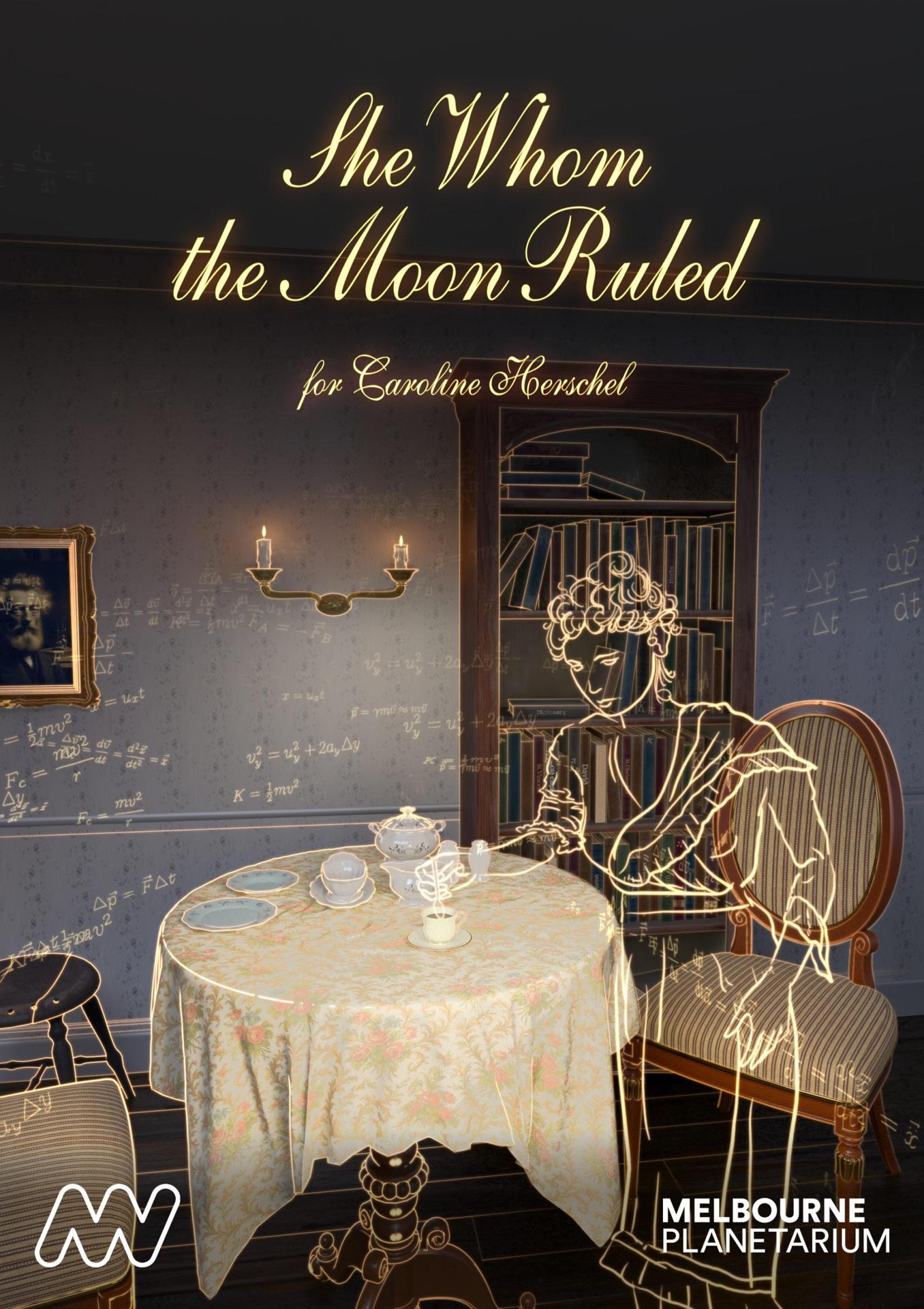
She Whom the Moon Ruled: Reclaiming the Shadows of Forgotten Female Pioneers in Astronomy and Media
History often casts long shadows, and in those shadows, many remarkable figures—especially women—have been obscured. The upcoming fulldome short, “She Whom the Moon Ruled,” offers a compelling ode to Caroline Herschel, one of the first female astronomers, whose contributions were eclipsed by those of her brother William Herschel. This narrative is more than a historical footnote; it speaks profoundly to the ongoing challenge within creative and cultural industries to amplify overlooked voices and rewrite narratives that have long favored the dominant. Immersive media like fulldome shows present a unique opportunity to bring such untold stories to light, breaking from traditional linear storytelling and engaging audiences in deeply reflective ways.
As the show puts it, “Caroline Herschel is regarded as one of the first female astronomers. Yet, Caroline stood in the shadows of her brother William Herschel who was also an astronomer.” This paradox—of monumental contributions quietly trailing behind more celebrated figures—resonates across disciplines. In the realm of fulldome and immersive media, which strives to envelop audiences both visually and emotionally, serving stories like Caroline’s does more than celebrate a single individual; it challenges existing paradigms of who gets to be the hero. Recent immersive productions have begun to explore similar ideas, such as “Women of the Sea,” which highlights female trailblazers in maritime history, leveraging immersive environments to craft empathetic connections. These creative endeavors not only educate but also invite audiences to reconsider established historical hierarchies and biases.
The significance of spotlighting figures like Caroline Herschel cannot be overstated in today’s cultural context. The creative industries face a pivotal moment wherein the stories chosen for amplification influence audience perceptions, cultural memory, and societal values. For venues like planetariums and dome theaters, programming that foregrounds historically marginalized voices can diversify audience demographics and foster deeper engagement. Moreover, as immersive media technologies evolve—with real-time rendering and interactive elements—the potential to create personalized and inclusive narratives expands exponentially. Ignoring these narratives risks perpetuating exclusion and diminishing the medium’s capability to inspire meaningful change. Embracing stories like Caroline’s can forge a sense of belonging and validation for those who see themselves reflected in these once-neglected histories.
Importantly, the long-term implications for content creators, distributors, and venues extend beyond mere representation. They touch on the sustainable evolution of immersive arts as a socially conscious platform. When audiences encounter narratives that challenge canonical histories, they are invited into critical dialogue, enriching the communal experience and fostering cultural literacy. Furthermore, the intersection of history, gender, and science in such shows can inspire STEM interest among younger demographics, especially girls who seek role models. As the industry pivots towards inclusivity, there is also an economic incentive: fresh perspectives and untold stories can differentiate offerings in a crowded entertainment landscape, driving attendance and funding opportunities.
As “She Whom the Moon Ruled” nears its debut, a larger question emerges for the immersive media community: How can creators, programmers, and venue operators collaboratively ensure that their platforms serve as amplifiers for those historically sidelined? Could the very nature of immersive storytelling—its capacity to place audiences inside the story—be leveraged not only to entertain but to educate and transform societal narratives? It is time to move beyond spectacle and use immersive media as a vehicle for reparation and recognition, honoring unsung pioneers like Caroline Herschel. Such commitment requires bold programming choices, inclusive creative teams, and active audience engagement strategies that champion diversity in stories and storytellers alike.
In reflecting on Caroline Herschel’s journey from the periphery to the center of an immersive fulldome show, the industry is challenged to rethink whose history it tells and how it tells it. The moon’s rule, metaphorically speaking, can be a beacon for those long eclipsed—inviting the creative sector to illuminate a fuller, richer universe of stories that reflect all facets of humanity. Will immersive media rise to that challenge and, by extension, expand not just our collective knowledge but our capacity for empathy? The answer may well shape the future trajectory of storytelling itself.
Originally sparked by reporting from Melbourne Planetarium via www.fddb.org on 2026-01-21 05:04:00.
Explore the original article here: www.fddb.org