

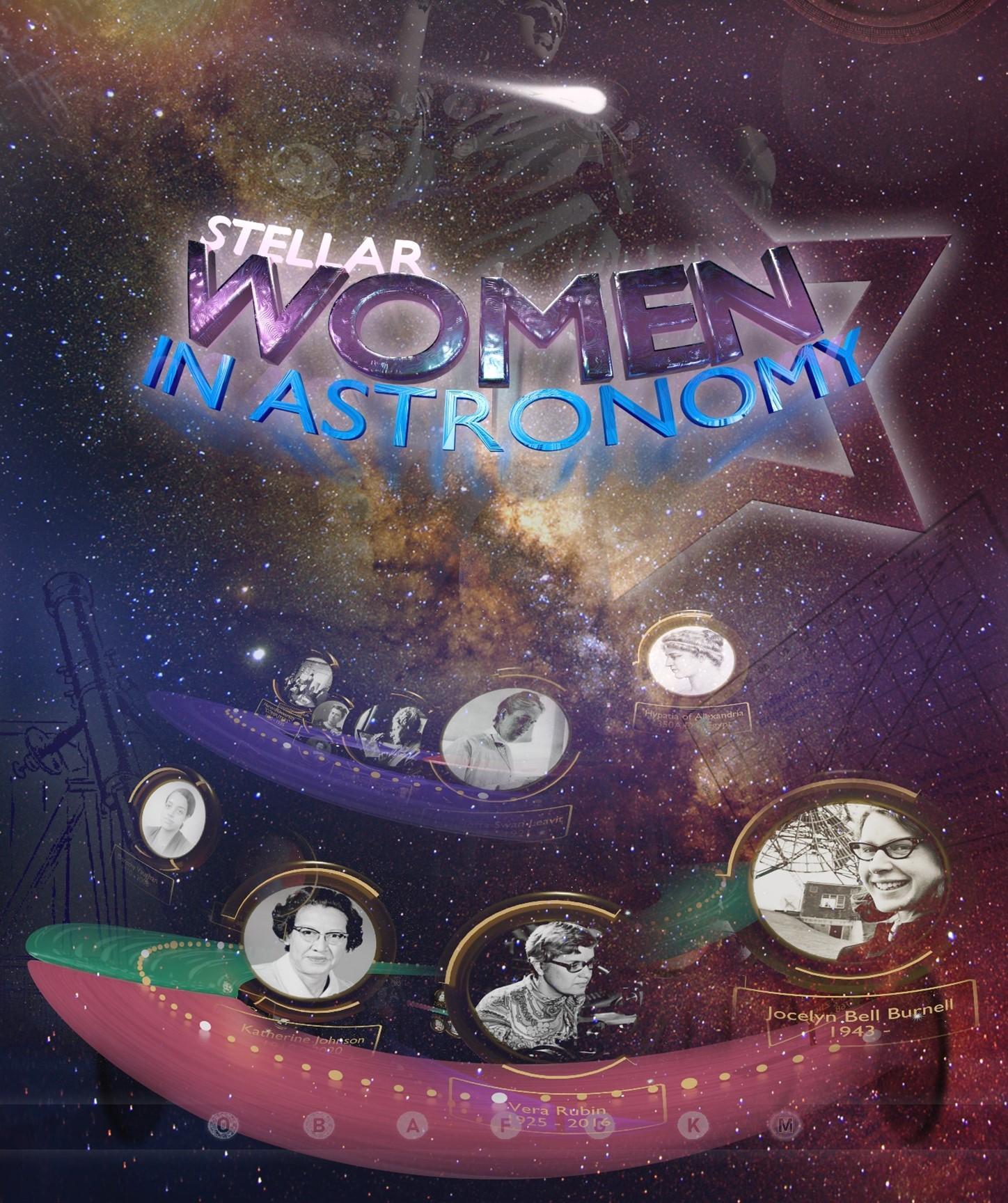
“Shining a Light on the Women Who Illuminate Our Skies”
The cosmos has long been a realm dominated in narrative and recognition by men, overshadowing the profound contributions of women whose brilliance has shaped astronomy. The dynamic new planetarium show, “Stellar Women in Astronomy,” serves not only as an inspiring tribute but as a necessary corrective to historical oversight. It sharply reminds us that innovation and discovery are not confined by gender and that celebrating these achievements enriches not just our understanding of the universe, but also our cultural and creative landscapes.
“Stellar Women in Astronomy” invites audiences to explore a timeline where women like Hypatia, Caroline Herschel, and Henrietta Leavitt sparked revolutions in understanding the stars. The program highlights “brilliance too often overlooked,” emphasizing how their groundbreaking work continues to inspire future generations. This framing echoes a wider cultural movement within fulldome and immersive media to diversify narratives and tell stories that challenge traditional canons. For example, planetarium shows like “Black Women in Space” and VR experiences focusing on indigenous cosmologies expand the gaze, revealing a cosmic history rich with diverse perspectives. These productions not only diversify content but also engage audiences who see themselves reflected in the stories told, increasing public interest and participation in science education.
The significance of spotlighting female astronomers extends beyond representation. It redefines who gets to be seen as leaders in STEM fields and who benefits from science communication efforts. Women, particularly those historically marginalized, often face systemic barriers that limit their visibility and impact. By embracing stories like those of Katherine Johnson, Vera Rubin, and Katie Bouman, the creative industries foster inclusivity and inspire a new generation to innovate boldly. Immersive media, with its emotive power and reach, can dismantle stereotypes and reshape audience expectations about who contributes to scientific knowledge and how. This shift matters because it not only democratizes the sky but also influences funding priorities, educational curricula, and public policy by highlighting the integral role women play in these fields.
Moreover, as fulldome theaters and immersive venues compete for audiences, fresh and inclusive content becomes crucial. Diverse storytelling attracts varied demographics, generating enthusiasm and expanding market potential. It challenges venues and creators to move beyond the familiar to innovate in both form and substance. This is especially important in an age where technology like AR and VR can create personalized and participatory experiences, fostering deeper engagement with astronomy’s rich history and ongoing discoveries. Ignoring the contributions of women risks not only cultural impoverishment but also lost opportunities to diversify audiences and funders who seek socially conscious programming.
The question now is: How can the planetarium and immersive media community sustain and amplify this momentum? It starts with not just celebrating past achievements but actively commissioning and supporting content creators—particularly women and underrepresented voices—that bring fresh perspectives to science communication. Programmers must rethink their selections to prioritize inclusivity as a core value, not a one-off gesture. Vendors should advocate for and develop technologies that facilitate diverse storytelling approaches, ensuring accessibility and engagement for all audiences. As producers and educators, the imperative is clear: to make the cosmos a place where everyone’s story has a chance to shine.
If we truly want to democratize the stars, the conversation must move beyond homage to action. How will your venue, your next show, or your next project ensure that the universe of stories it tells—and the people it inspires—are as boundless as the cosmos itself? The women featured in “Stellar Women in Astronomy” have opened the door; it is now the creative industry’s responsibility to walk boldly through it.
Originally sparked by reporting from Robert Bonadurer via www.fddb.org on 2025-12-14 23:39:00.
Explore the original article here: www.fddb.org