

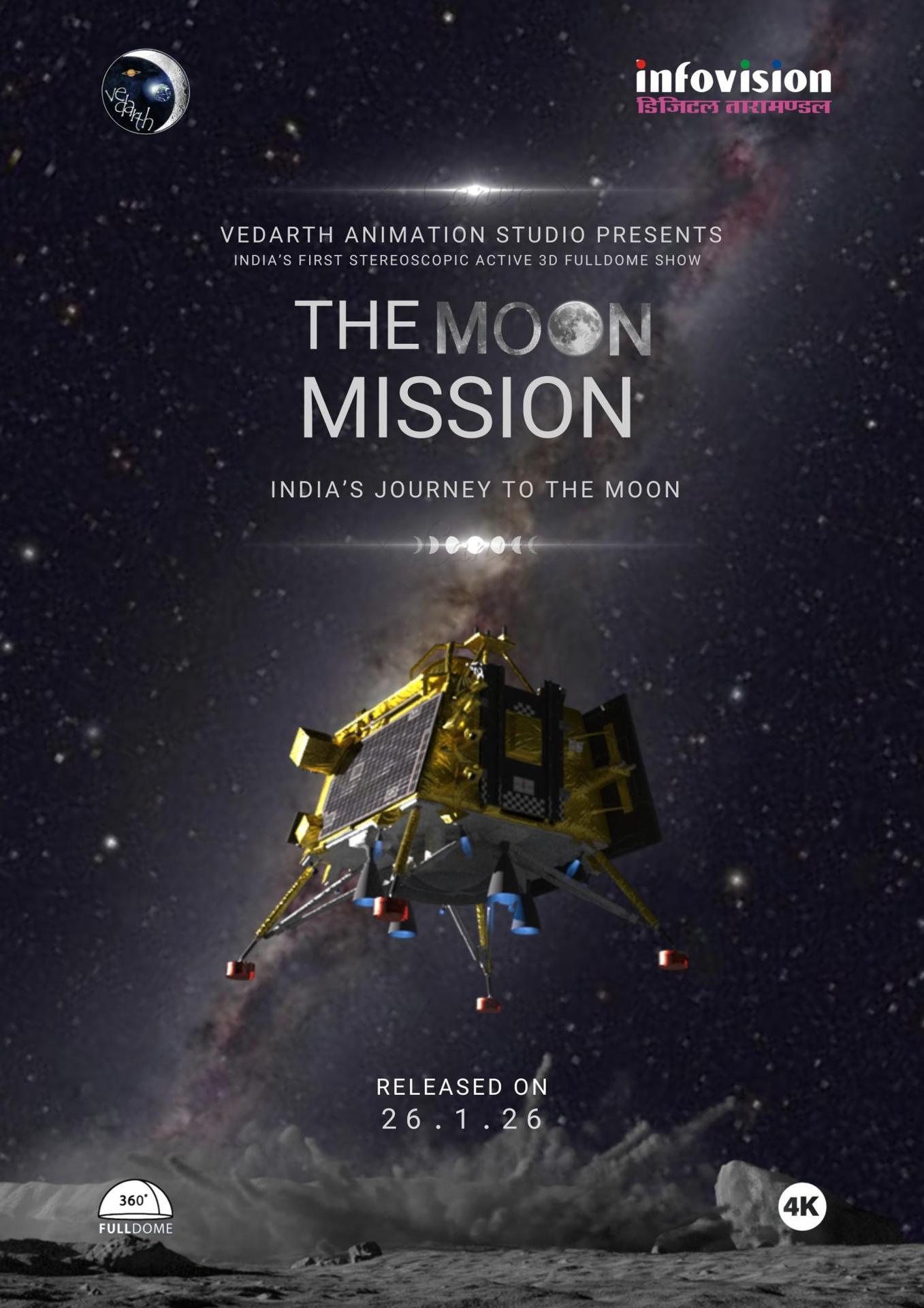
The allure of space exploration is as boundless as the cosmos itself, yet it often dwells within the sterile confines of textbooks and documentaries. What if, instead of passive viewership, audiences were thrust directly into the heart of the moon’s mysteries, experiencing its surface as if standing there themselves? “The Moon Mission,” a full dome immersive show developed by Vedarth Animation Studio, exemplifies the transformative power of immersive media in bridging the emotional and intellectual gap between complex scientific narratives and public engagement. Such experiences transcend mere education; they ignite imagination, foster deeper understanding, and democratize access to the grandeur of space exploration.
“The Moon Mission” does more than recount history; it “traces humanity’s enduring fascination with the Moon and our quest to explore its surface,” offering audiences a multi-sensory journey from the Moon’s formation to future exploratory missions. The show’s premise—that our satellite influences everything from tides and timekeeping to the very rhythms of life on Earth—grounds celestial phenomena in tangible, relatable terms. Through breathtaking visuals and dynamic sequences, the dome show elucidates lunar geology, gravity, and the challenges of survival in an airless environment, all while transporting viewers inside a cinematic lunar landscape. This immersive approach reflects a trend gaining momentum in planetary science education: using fulldome and virtual reality technologies not just for spectacle, but as vital tools to render scientific complexity accessible and emotionally resonant.
This innovation in storytelling is echoed across the creative industry. Institutions like planetariums, museums, and science centers increasingly embrace immersive fulldome experiences to captivate their audiences, replacing passive learning with active engagement. Productions such as “Journey to the Stars” and “Cosmic Wonders” similarly utilize fulldome technology to reveal the mysteries of the universe with unprecedented intimacy and detail. Beyond education, immersive media is reshaping entertainment and culture; VR and AR experiences are opening new frontiers for interactive narratives, whereby users do not just witness but participate in stories. However, this evolution also incurs notable challenges: content creators must balance factual accuracy with narrative appeal, and venues must navigate substantial investment in cutting-edge technologies and audience education to maximize these experiences.
The significance of immersive experiences like “The Moon Mission” extends far beyond the spectacle. They serve as a vital bridge between scientists and the public, fostering scientific literacy and curiosity in an era confronted by misinformation and disengagement. The immersive format particularly benefits younger generations, who are digital natives, by matching their media consumption preferences with educational content that inspires rather than lectures. Moreover, as humanity embarks on renewed lunar exploration and envisions lunar habitats, public understanding and enthusiasm are critical to sustaining funding, policy support, and international collaboration. The industry itself benefits from the expansion of immersive content that is both educational and entertaining, spurring innovation, audience growth, and cross-sector partnerships between science, technology, and the arts.
As immersive media reshapes how we connect with space science, it prompts the industry to consider its broader responsibilities and potential. Are creators prepared to harness this power responsibly, ensuring accuracy and inclusivity as they push technological boundaries? Venues must continue investing in accessibility and outreach, making immersive science experiences affordable and appealing to diverse audiences. For programmers and developers, the future lies in integrating interactivity, personalized storytelling, and real-time data to deepen engagement further. Most importantly, the community must collectively ask: how can immersive storytelling expand beyond education, becoming a catalyst for public participation in shaping the future of space exploration? It is time to view immersive experiences not just as entertainment but as a vital tool for inspiring a new generation of explorers, scientists, and dreamers—on Earth and beyond.
Originally sparked by reporting from Vedarth Animation Studio via www.fddb.org on 2026-02-25 07:15:00.
Explore the original article here: www.fddb.org