

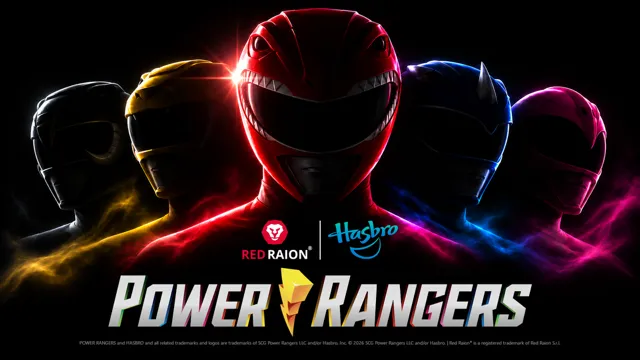

Red Raion has built its reputation at the intersection of spectacle and scalability, and its new collaboration with Hasbro adds another high-profile chapter to that story. The CGI studio, known for creating media-based attractions for dome theaters, VR environments, and other immersive venues, has announced a licensed Power Rangers experience designed for 5D, VR, Dome, and Fly formats. For operators, that means a globally recognized franchise with built-in multigenerational appeal; for audiences, it signals the arrival of a familiar hero property in a format that can turn nostalgia into shared, physical excitement.
The news matters because it reflects a growing truth about immersive exhibition: recognizable intellectual property can be a powerful gateway into experiential media, especially when the content is built for flexible deployment across different venue types. Power Rangers has been part of pop culture for decades, spanning television, film, toys, comics, and games. In a dome or large-format attraction, that legacy becomes more than branding. It becomes a ready-made emotional shorthand—one that can draw in families, longtime fans, and casual visitors alike.
“Power Rangers is a brand that generations of families grew up with, and that shared memory is exactly what makes it so powerful in an attraction,” said Valeria Rizzo, Chief Brand Officer at Red Raion. That statement gets to the heart of why this project is more than just a licensing announcement. Red Raion is not only borrowing a familiar name; it is betting that memory itself can be an engine for immersion.
The studio’s broader ambition is equally clear. “We build experiences that operators can rely on and audiences remember,” Rizzo added. In the fulldome and location-based entertainment world, that dual promise is crucial. Venues need content that can perform consistently, travel well, and fit a range of technical setups. Audiences, meanwhile, need something that feels vivid enough to justify the trip. Red Raion’s model aims to satisfy both sides of that equation.
Hasbro’s own framing suggests the same appetite for immediacy. “Power Rangers has always been built on action, and that’s exactly what these immersive formats do best,” said Matt Proulx, Senior Vice President, Global Experiences, Partnerships and Music at Hasbro. In practical terms, that means the franchise’s core DNA—motion, transformation, teamwork, and high-energy conflict—translates naturally into dome-based storytelling, where the audience is not merely watching action but being surrounded by it.
What makes this especially interesting for the fulldome medium is the way it reinforces a long-running trend: the move from passive viewing toward sensation-driven narrative. Dome content has often thrived when it can combine broad visual scale with clear emotional hooks, and a property like Power Rangers offers both. It can support bold color design, fast transitions, and high-contrast character moments that read well across a curved surface. Just as importantly, it offers a rhythm of anticipation and payoff that suits immersive formats built around presence and motion.
There is also a strategic lesson here for the wider immersive sector. The most successful fulldome projects increasingly blur the line between entertainment and attraction, offering content that can live in planetariums, family entertainment centers, touring domes, and specialty venues without losing its impact. That versatility is becoming a defining feature of the market. Projects like this one point toward a future in which franchises are conceived not only for screens, but for spaces—designed to travel across the global exhibition ecosystem with minimal loss of force.
For the fulldome community, Red Raion’s Power Rangers collaboration is a reminder that the medium’s future may depend as much on cultural recognition as on technical innovation. Festivals, planetarium programmers, and LBE operators are all searching for experiences that can connect across generations and geographies. A title like this has the potential to do exactly that: bring a beloved franchise into an immersive environment, and use the dome not just as a display format, but as a storytelling accelerator.
Originally reported by IPM News via www.inparkmagazine.com on 2026-11-18 14:17:00.
Read the full original article here: www.inparkmagazine.com