


At first glance, a planetarium may seem like a familiar civic fixture: a darkened theater, a soaring dome, and a promise of a trip beyond the everyday. But in the fulldome world, the most interesting venues are no longer just places to show stars. They are becoming hybrid cultural engines — part science center, part cinema, part community stage — and that shift is reshaping how immersive content is made, marketed, and shared.
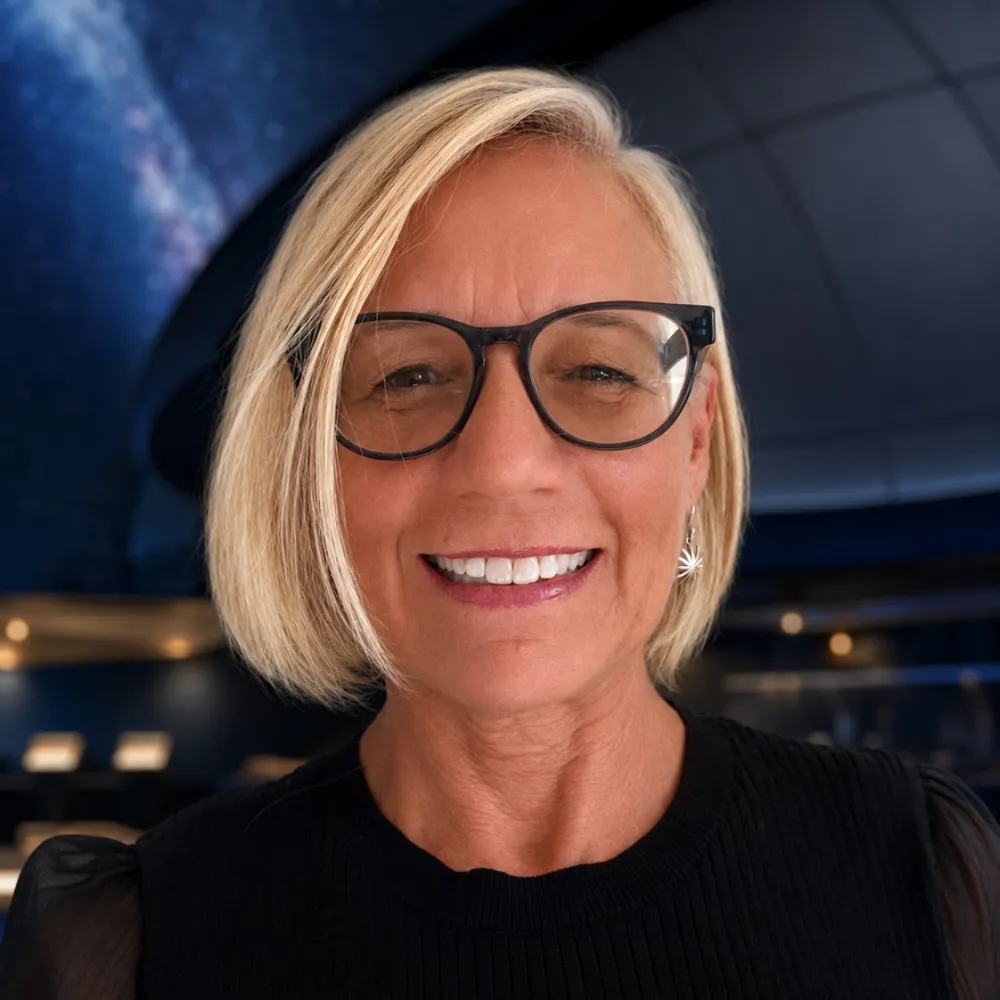
That is the larger context for understanding the work of Tina Ratterman, whose consulting practice sits at the intersection of distribution strategy, exhibition planning, and planetarium operations. Her focus is not on spectacle for its own sake, but on the practical infrastructure that allows immersive work to travel. In a field where a film’s success can depend on whether a theater can confidently book it, promote it, and measure its impact, that kind of support matters.
For producers, Ratterman’s value lies in helping a project become more than a finished master file. She works on the unglamorous but essential machinery of release: positioning, licensing strategy, distribution planning, and marketing materials. One of the clearest takeaways from her approach is the emphasis on empowering creators to reach audiences directly. As the source notes, she offers “guided self-distribution services” that give producers “the tools and support to manage their own outreach and sales.” In a field where independent fulldome teams often lack traditional studio infrastructure, that guidance can be the difference between a film that circulates and one that stalls.
For planetariums and theaters, the challenge is just as complex. These venues are often expected to serve multiple constituencies at once: school groups in the morning, families in the afternoon, and art-minded adults or special-event audiences at night. Ratterman’s consulting addresses that reality by helping venues think strategically about programming, licensing negotiations, marketing, and publicity. She also points to the operational side of the business, including better ways to manage internal film, attendance, revenue, and performance data through tools such as CineMetrics™. That kind of measurement is increasingly important as planetariums seek to justify programming choices not only in educational terms, but also in financial and audience-development terms.
The broader significance of this work becomes clearer when placed against the evolution of the modern dome itself. Today’s fulldome venues are no longer defined solely by astronomy content or school curriculum support. Around the world, they are embracing documentary storytelling, live performance, experimental art, and cross-disciplinary collaborations. Many are upgrading to laser projection systems, improving resolution and brightness, and redesigning audience sightlines to support more flexible content. Others are experimenting with hybrid schedules that blend science communication with ticketed cultural events. The result is a venue type that increasingly resembles an immersive repertory house, with the dome as both instrument and screen.
That flexibility also raises expectations. A planetarium with cutting-edge projection can still struggle if it lacks a coherent programming strategy. A strong audience relationship can still falter without data that shows what is working. This is where consulting that bridges creative ambition and business pragmatism becomes especially valuable. The most successful venues tend to be the ones that understand their own identity: whether they are chiefly educational institutions, community theaters, arts destinations, or all three. The best fulldome projects, in turn, are those that know how to speak to that identity while still offering something surprising.
Ratterman’s contribution to the field is ultimately about circulation and access. By helping producers get films “onto more screens” and helping theaters make “informed programming and business decisions,” she supports a healthier ecosystem for everyone involved. More screens mean more opportunities for creators. Better venue decisions mean better audience experiences. And when those two goals align, the fulldome field grows not just in size, but in maturity.
For the global immersive community, that may be the real story: not simply that domes are becoming more advanced, but that the people working around them are building the systems needed to sustain them. In that sense, consulting is not peripheral to the fulldome movement. It is part of the infrastructure that makes the next generation of dome storytelling possible.
Originally reported by via fddb.org on 2026-08-31 02:37:00.
Read the full original article here: fddb.org