

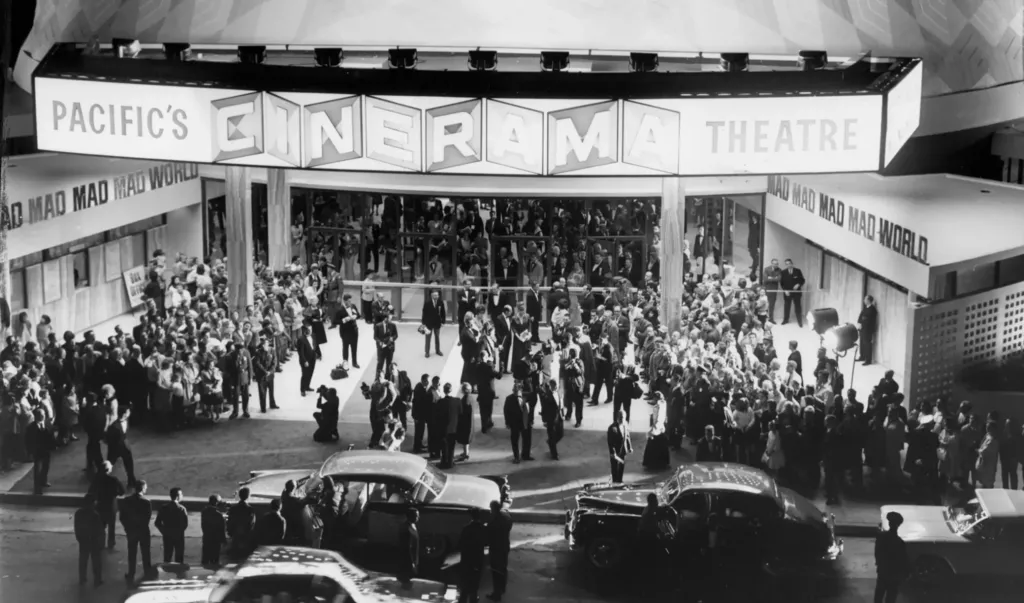

The Dome Revival Signals a Broader Reinvestment in Premium Immersive Cinema
The reopening and restoration of the Cinerama Dome is more than a nostalgia play for Hollywood heritage. It reflects a larger industry recalibration around theatrical exhibition: one that values venue identity, sensory distinction, and event-based programming as differentiators in a crowded attention economy. As audiences become increasingly selective about what merits a trip out, cinemas are responding by leaning into spaces that cannot be replicated at home. In that context, iconic large-format venues are being repositioned not just as screens, but as cultural destinations.
That shift is especially relevant to the immersive media world, where the line between “moviegoing” and “experience design” continues to blur. Premium formats, repertory curation, filmmaker Q&As, archival presentations, and special-event programming are increasingly functioning as audience acquisition tools. The Cinerama Dome project, alongside the adjacent ArcLight complex relaunch, suggests that major exhibitors see long-term value in building ecosystems around distinct venues rather than relying solely on volume-driven release cycles.
One of the clearest signals in the announcement is Sony’s framing of the project as an investment in experiential cinema, not simply a renovation. As Ravi Ahuja put it, “There is no moviegoing destination anywhere in the world that commands the affection, history, and cultural significance of the Cinerama Dome.” That statement is doing strategic work: it positions the Dome as an irreplaceable brand asset, and it underscores a broader industry belief that legacy venues can still generate cultural and commercial momentum when they are treated as premium experiences.
Tom Rothman’s remarks sharpen that thesis. “I am deeply proud that Sony is investing in Hollywood, literally,” he said, tying the project to both place-based storytelling and industrial confidence in theatrical exhibition. The emphasis on “preserving its legendary history while ensuring it remains vibrant now and far into the future” captures a common challenge across immersive venues: maintain authenticity while updating operations, technical capability, and programming to meet contemporary expectations. That tension is familiar to fulldome operators as well, especially those balancing heritage architecture with modern projection, sound, and accessibility requirements.
Michael Kustermann’s comment that “for 30 years we have championed the kind of theatrical experience that turns a screening into an event” points to another important trend: the premium venue is becoming a platform for community and fandom, not just a place to consume content. Across the industry, we have seen repertory bookings, anniversary screenings, genre marathons, and creator-led presentations outperform standard one-off showtimes in terms of engagement. Large-format and specialty venues are increasingly leaning into curation as a business model, because programming itself has become part of the value proposition.
For fulldome content distribution, this matters in several ways. First, it reinforces the idea that venue-specific content can command attention when paired with a distinctive physical environment. Touring domes, pop-up installations, museum partnerships, and festival circuits remain essential pathways for reaching audiences, but the market is also maturing toward hybrid release strategies. Creators are thinking not only about exhibition windows, but about how a work can move from festivals to educational institutions to licensed venue networks, sometimes with tailored versions for different screen geometries, sound systems, and audience profiles.
Second, the rise of curated premium venues may improve leverage for creators and rights holders. When an exhibition setting is part of the appeal, the content package becomes more defensible: producers can sell not just a film or show, but a programmed experience, with sponsorship, live components, or added-value elements. That can open new revenue streams, especially for projects that are too specialized for traditional wide release but strong enough to travel through niche circuits. It also encourages better metadata, technical specifications, and exhibition planning upfront, because distributors increasingly need to match content to venue capabilities.
For producers, curators, and institutions, the implication is clear: content alone is no longer the whole product. Packaging, context, and venue identity are becoming central to distribution strategy. Traditional theaters that want to remain relevant may need to invest in distinctive programming, premium presentation standards, and community-building features. Meanwhile, creators in immersive formats should prepare for a market that rewards flexibility — works that can tour, adapt, and be reactivated across multiple exhibition environments will likely have the strongest long-term performance.
Originally reported by IPM News via www.inparkmagazine.com on 2026-07-31 15:27:00.
Read the full original article here: www.inparkmagazine.com