

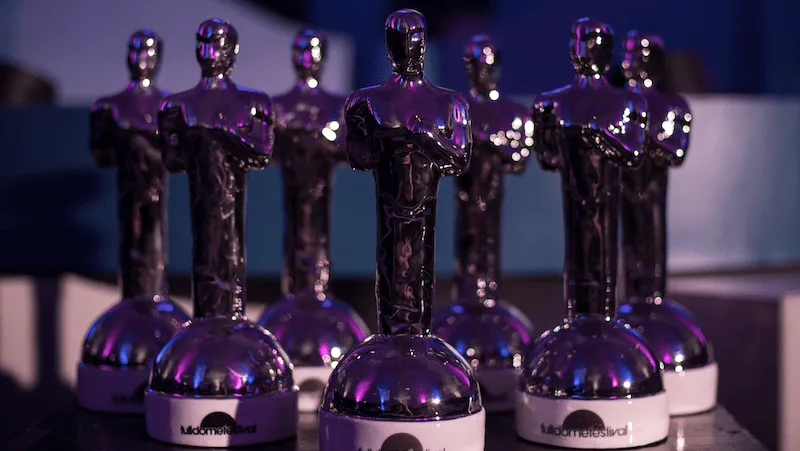

The Jena FullDome Festival’s 20th edition offered more than a showcase of technical craft; it highlighted how fulldome storytelling can serve education, cultural understanding, and public engagement at once. As immersive media continues to evolve, festivals like Jena create a rare forum where artists, educators, planetarium producers, and technologists can test what the format can do beyond spectacle. The 2026 JANUS Awards, announced at the close of the festival, underscore that fulldome work now spans science, education, art, children’s media, and sonic experience—an encouraging sign that immersive content is increasingly being designed with learning and audience connection in mind.
That broader mission is evident in the festival’s celebration of productions that treat fulldome as a meaningful communication tool. Organizers describe the event as “another year of creativity, innovation, and immersive storytelling from across the international fulldome community,” a description that captures the format’s expanding educational value. When a festival recognizes work across categories such as Best Science, Best Education, and Best Children, it signals that immersive storytelling is not just entertainment; it can also be a pathway to curiosity, reflection, and shared discovery. The recognition of emerging artists alongside established creators also suggests a healthy pipeline of new voices shaping the future of planetarium-based learning.
The award list itself reflects the format’s diversity of purpose. “One Step Beyond,” named Best Science, suggests the continuing power of fulldome to translate complex ideas into experiences audiences can feel as well as understand. “ALTARS of Memory and Magic,” honored for Best Education, points to the value of immersive media in helping learners connect abstract themes to emotionally resonant visual worlds. And “Goodbye Goldie,” awarded Best Children, reminds us that younger audiences benefit when educational media is designed with imagination and accessibility in mind. In that sense, the festival is validating a belief long held by many educators: learning deepens when content is experiential, memorable, and emotionally engaging.
The impact of these works is especially relevant in STEAM and informal learning settings. Fulldome productions can support science literacy by making scale, motion, and spatial relationships easier to grasp than in flat-screen formats. They can also reinforce arts integration by combining narrative, music, visual design, and research into one shared experience. For schools, museums, and planetariums, that blend matters. It creates opportunities for cross-curricular learning, where a single screening can support discussions in science, art, history, and media literacy. It also opens doors for audiences who may not respond as strongly to traditional classroom instruction but are moved by immersive environments.
Equally important is the way the honored projects suggest a commitment to inclusion and broader public access. Categories such as Best Education and Women in Fulldome point to a field that is increasingly aware of representation, authorship, and audience diversity. That matters because immersive learning becomes more powerful when more communities can see themselves reflected in the stories being told. The festival’s celebration of artists from Germany, the United States, Canada, Mexico, Brazil, France, and beyond demonstrates how fulldome has become an international language for sharing knowledge and emotion across cultural boundaries.
For the wider fulldome industry, the 2026 JANUS Awards offer a useful model. They show that immersive education does not have to be limited to one genre, one age group, or one institutional setting. Instead, the field can support science communication, emotional storytelling, artistic experimentation, and early childhood engagement at the same time. That flexibility is one reason fulldome remains such a promising medium for museums, science centers, and planetariums seeking new ways to connect with the public. As the Jena FullDome Festival marks two decades of programming, it is helping define a future in which immersive media is not just visually impressive, but educationally meaningful and socially relevant.
Originally reported by via www.inparkmagazine.com on 2026-07-20 10:32:00.
Read the full original article here: www.inparkmagazine.com