

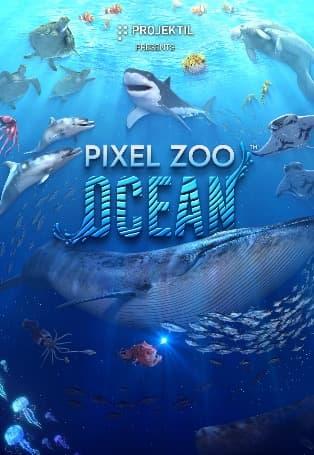
In an era dominated by screens and shrinking attention spans, the Pixel Zoo™ Series offers a striking testament to the power of immersive edutainment to reconnect children—and their families—with the wonders of the natural world. This project doesn’t just entertain; it transforms passive media consumption into active, shared experiences that stimulate curiosity, empathy, and ecological awareness. The intersection of art, technology, and education embodied in Pixel Zoo challenges conventional narratives around children’s learning environments and highlights the growing importance of immersive media as a conduit for meaningful engagement.
As the source highlights, Pixel Zoo is “designed for children aged 6 to 12 and their families,” blending “high-quality immersive visuals, sound, and storytelling to spark curiosity, encourage learning, and foster a deeper appreciation for the natural world.” This approach is more than clever marketing—it is a purposeful reimagining of how content can be crafted and delivered for maximum impact. Developed in collaboration with Zoo Zurich experts, the series translates “complex ecological themes into playful, accessible experiences” that resonate across generations. This melding of scientific accuracy, artistic creativity, and technological innovation represents a fresh paradigm in children’s media: one that respects young audiences as intelligent, emotionally responsive learners rather than passive recipients.
Looking beyond Pixel Zoo, the broader creative industries increasingly demonstrate the potential of immersive experiences to transcend traditional entertainment models. The fulldome field, for example, creates enveloping environments that literally place audiences inside spectacular visual and narrative worlds. Institutions such as planetariums have long leveraged this technology for education, but modern innovations by collectives like PROJEKTIL—who craft multimedia projects at the nexus of art and tech—push these experiences into new dimensions of interactivity and emotional resonance. Similarly, immersive media installations such as VR nature walks or interactive museum exhibits engage multiple senses, making learning more memorable and impactful. Yet, this rich potential comes with challenges: balancing technical sophistication with accessibility, ensuring content remains inclusive and compelling to diverse audiences, and navigating the financial and logistical investments required for such ambitious projects.
The imperative behind this movement is profound. In a time when environmental concerns are urgent and children’s screen time increasingly passive, experiences like Pixel Zoo offer a blueprint for how creative industries can contribute to cultural shifts. Immersive edutainment not only imparts knowledge but cultivates empathy and stewardship, vital qualities for future generations tasked with safeguarding the planet. This approach also reshapes expectations within the industry ecosystem, urging creators to consider longevity and social impact alongside entertainment value. Venues must adapt to host experiential formats that require specialized infrastructure and fresh programming mindsets. Meanwhile, audience behavior is evolving—families seek meaningful, shared experiences that balance digital engagement with real-world connection. The success of projects like Pixel Zoo thus signals a broader trend: immersive media is no longer niche but a central pillar of contemporary culture and education.
As the creative community reflects on these developments, a critical question emerges: how can we collectively harness the power of immersive technology to build not just richer experiences, but a more informed and compassionate society? Programmers and creators might rethink their content pipelines to prioritize collaboration with experts and educators, ensuring authenticity and depth. Vendors and venues could explore innovative partnerships and modular infrastructure investments that democratize access to immersive programming. Above all, there is a call for ongoing dialogue and experimentation—an openness to evolving formats that transcend boundaries between art, science, and community engagement. In embracing immersive edutainment, we invite not only children but entire families into a collaborative journey of learning and wonder, fostering the curiosity and care that our world so desperately needs.
Originally sparked by reporting from Anja Diggelmann via www.fddb.org on 2026-03-02 04:39:00.
Explore the original article here: www.fddb.org